Alright folks, Mark here from Fastlane Autocare. Welcome back to our ongoing series where we pull back the curtain on the MOT test. If you’ve been following along, you’ll know we’ve already covered everything from brakes to lights. Today, we’re tackling a big one: Episode 7, all about Exhaust and Emissions Control.
This is a section of the MOT that can be a bit of a mystery for many drivers. You can see a bald tyre or hear a squeaky brake, but you can’t always "see" an emissions failure until the computer screen at the garage turns red. With the UK’s environmental standards getting stricter every year, keeping your exhaust system in top shape isn't just about passing your MOT: it's about keeping the air clean and your engine running efficiently.
Why Does the MOT Check the Exhaust?
The exhaust system has three main jobs: it carries toxic gases away from the cabin, it quiets the noise of the engine, and it filters out the nasties before they hit the atmosphere. During an MOT, we’re looking at the physical condition of the pipes and the actual quality of what’s coming out of the tailpipe.
If your exhaust is blowing, leaking, or hanging by a thread, it’s an immediate concern. Not only is it loud and annoying for your neighbours, but it can also lead to carbon monoxide leaking into the car, which is incredibly dangerous.
The Physical Inspection: More Than Just a Pipe
When we get your car up on the ramp, the first thing we do is a thorough visual and physical check. We’re looking for:
-
Security: Is the exhaust actually attached to the car? We check all the brackets, hangers, and mountings. If a rubber mount has perished and the exhaust is swinging wildly, that’s a fail.
-
Leaks and Corrosion: A small patch of rust is usually fine, but if there’s a hole where gas is escaping before it reaches the end of the pipe, we have a problem. "Blowing" exhausts often fail because the leak messes up the emissions readings.
-
The Catalytic Converter (CAT): On most petrol cars registered after 1992, a catalytic converter is mandatory. If yours is missing or looks like it’s been tampered with, it’s an automatic fail.
If we find that your exhaust has rusted through, our team of expert mechanics can often help with vehicle welding to repair sections rather than replacing the whole unit, saving you a bit of cash where possible.
The "Sniffer" Test: Emissions Explained
This is the part that makes people nervous. We stick a probe into your tailpipe and let the machine do the talking. The limits depend on how old your car is and whether it’s petrol or diesel.
Petrol Emissions
For petrol cars, we’re looking at Carbon Monoxide (CO), Hydrocarbons (HC), and the "Lambda" reading. Lambda is basically a measure of the air-to-fuel ratio. If your car is running "rich" (too much fuel), your CO levels will skyrocket. This is often caused by a faulty oxygen sensor or a clogged air filter.
Diesel Emissions (The Smoke Test)
Diesels are a different beast. Instead of checking specific gases, we check for "opacity", basically, how much soot or smoke is coming out. If you’ve got a modern diesel, you’ll have a Diesel Particulate Filter (DPF). If that DPF has been gutted or removed, the car will fail instantly.
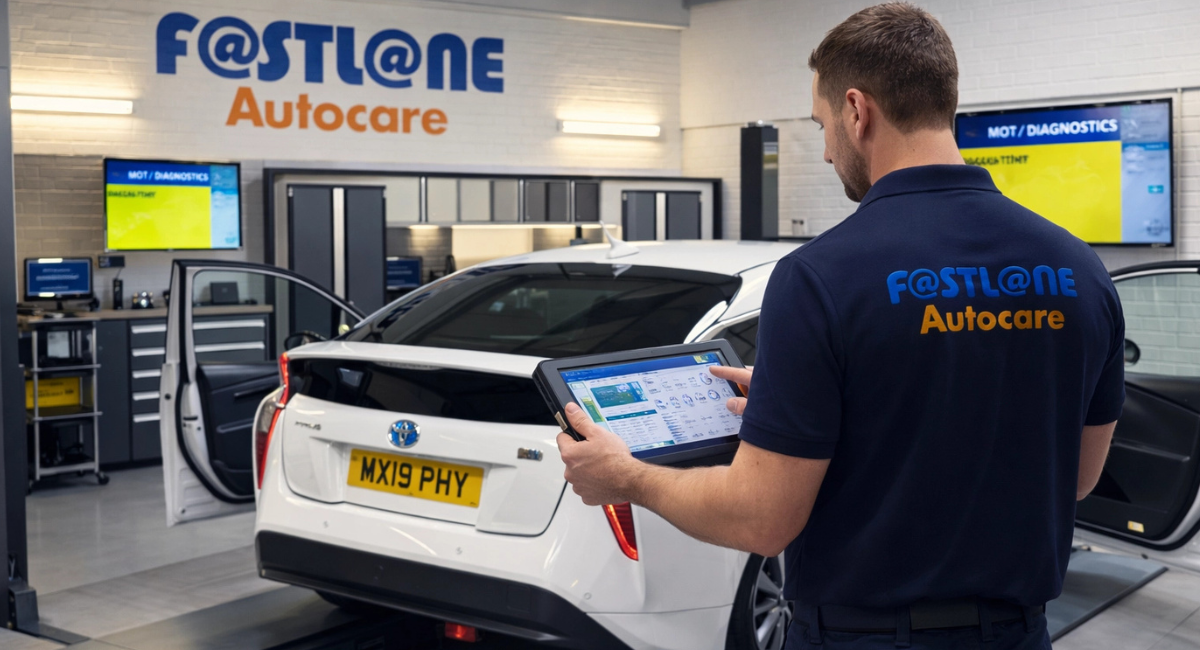
A Fastlane Autocare technician performs an emissions test using a modern gas analyser in a clean, photorealistic garage setting.
The Role of Modern Tech: DPFs and AdBlue
If you drive a newer diesel car, you’re likely familiar with the dreaded DPF warning light. These filters catch soot and then "burn" it off during long drives. If you only do short trips to the shops, the DPF can’t get hot enough to clean itself, leading to a clog and an MOT failure.
Similarly, many modern vehicles use AdBlue to reduce Nitrogen Oxide (NOx) emissions. If your AdBlue system is faulty or the tank is empty, your engine might go into "limp mode," and you’ll definitely see a warning symbol on your dashboard, which can result in an MOT failure.
At Fastlane Autocare, we see a lot of high-end machinery, and whether you're bringing in a family hatchback or you need German car specialists for your BMW or Audi, we have the diagnostic tools to figure out why your emissions are high before we even start the test.
Fuel System Integrity
While the exhaust gets all the glory, the fuel system is just as important in this section of the MOT. We check the entire length of the fuel lines for leaks or signs of rubbing. If you want a deeper dive into what testers look for and how to avoid common fails, have a look at The Fastlane MOT Bible
A very common and silly reason for MOT failure is a faulty fuel cap. If the seal on your fuel cap is cracked or if the cap doesn't lock properly, vapours escape, and that’s a fail. Before you head to your MOT, just double-check that your fuel cap clicks into place and isn't held together with duct tape!
A Note on Performance and Maintenance: The Wet Belt
While we’re talking about engine efficiency and emissions, we have to mention one of the most critical maintenance tasks: the wet belt. Many modern engines use a "belt-in-oil" system. If this belt starts to degrade, it can clog the oil pick-up, leading to poor engine performance, increased emissions, and eventually, total engine failure.
At Fastlane Autocare, we perform wet belt replacements for all vehicle makes and models, including Fords, Peugeot, and Vauxhall. Keeping your engine timed correctly and clean internally is the best way to ensure you pass that emissions test with flying colours.
Common Reasons for Failure (And How to Avoid Them)
-
The Engine Management Light (EML): If this light is on, it’s an automatic MOT fail. The EML usually triggers because the car’s computer has detected an issue with the emissions system. Don't ignore it!
-
Short Trip Syndrome: If you drive a diesel, take it for a 20-minute blast on the motorway a few days before your MOT. This helps clear out the DPF and reduce the smoke levels for the test.
-
Exhaust Leaks: Listen for a deeper, sportier sound than usual. If your car sounds like a race car but it’s a 1.2L Corsa, you’ve probably got a leak.
-
Poor Servicing: Old oil and dirty air filters make the engine work harder and produce more emissions. A fresh service right before an MOT is always a smart move.
Why Choose Fastlane Autocare?
When it comes to MOTs, you want a team that knows their stuff. We don't just tell you that your car failed; we explain why and show you how we can fix it. Our workshop is equipped with the latest gas analysers and diagnostic computers, ensuring your readings are 100% accurate.
Whether it's a simple exhaust bracket or a complex DPF issue, we’ve got the parts and the expertise to get you back on the road. We even handle air conditioning services, because let's face it, if your car is running efficiently, you want the cabin to be comfortable too!
Final Thoughts
The exhaust and emissions check is the MOT's way of making sure your car isn't "choking" the environment or you. It’s a vital safety and environmental check that keeps our roads cleaner. By staying on top of your servicing and listening out for those tell-tale exhaust blows, you can stay ahead of the game.
If you’re worried about your emissions or your exhaust is sounding a bit rough, give us a shout. We’re here to help you pass the first time.
Fastlane Autocare
Address: 232-254 Boundary Rd, WA10 2PZ
Phone: 01744 808586
Stay tuned for Episode 8 of the Fastlane MOT Bible, where we’ll be diving into the world of suspension and steering. Safe driving!
<< Return to news